Red Rose Assurance Shariah ISA Review (2026): Is It Halal, and Is It Worth the Fees?

Adil Hussain
27 November 2026 9 min read
Adil Hussain
Head of Content
17 min read
Last updated on:
SPUS holds about $3.3 billion, which makes it the largest halal ETF in the world. It has also beaten the S&P 500 over the last five years (not something many halal funds can say).
Most Muslim investors have heard of SPUS. Far fewer know that the company behind it, SP Funds, runs four other halal ETFs covering global tech, international shares, real estate and sukuk, plus a set of halal target-date funds for retirement. And UK investors who go looking for any of them find they can't buy them.
This review goes through each SP Funds ETF in turn: whether it's halal, how it has performed, what it costs against the conventional and halal alternatives, and what to buy from the UK instead.
This is the article version of our video on SP Funds, so if you'd rather watch, here it is:
A note on the numbers: every return, fee and fund size below was correct when we wrote this, and most of them will have moved by the time you read it (performance figures especially). We won't be updating them regularly as they change (as it’s simply impractical), so treat them as a snapshot rather than today's price. What matters more is understanding what each number tells you about a fund, and those lessons don't go out of date nearly as fast. Check the provider's own site for the latest figures before you invest.
SP Funds offers five halal ETFs (SPUS, SPTE, SPWO, SPRE and SPSK) and three target-date funds.
| ETF | What it covers | Annual fee | Our take | UK-available alternatives |
|---|---|---|---|---|
| SPUS | US shares (Shariah-screened S&P 500) | 0.45% | Solid, heavy on tech | HIUS, ISUS, SPWI |
| SPTE | Global technology | 0.55% | The only halal tech ETF | None |
| SPWO | Shares outside the US | 0.55% | Worth considering, Taiwan-heavy | No direct match: ISDE, HSBC's regional ETFs |
| SPRE | Real estate (REITs) | 0.50% | Weak on price and income | HINS |
| SPSK | Sukuk | 0.50% | Useful, but compare fees | HSKD, SKUK |
| Target-date funds | A mix of the above, by retirement year | ~1.3% | Convenient, expensive | None |
SP Funds is an American fund provider, founded in 2019, that only makes Shariah-compliant investment products. SPUS is its flagship, alongside four other ETFs (SPTE, SPWO, SPRE and SPSK) and target-date funds for 2030, 2040 and 2050. (If ETFs are new to you, our complete guide to halal ETF investing starts from the beginning.)
SPUS is SP Funds' halal alternative to the S&P 500.
The S&P 500 tracks around 500 of the largest companies listed in the US, such as Apple, Nvidia and Meta. Put $100 into an S&P 500 fund and the manager spreads it across all 500, buying a small piece of each.
SPUS starts with the same 500 and applies a Shariah screen, tracking the S&P 500 Shariah Industry Exclusions Index. That leaves roughly 200 companies, and a fully Shariah-compliant version of the S&P 500.
Yes. SPUS only holds companies that pass a Shariah screen, and it's widely accepted as a halal ETF. The screen works in two stages:
The holdings are reviewed regularly, and companies that stop meeting the criteria are sold. (For more on how these screens work, and why the S&P 500 itself doesn't pass, see our guide to whether the S&P 500 is halal.)
Yes. A small part of the income from screened companies still comes from non-compliant sources, and SP Funds leaves the purification to you rather than doing it inside the fund. It publishes a purification percentage for each fund every quarter, recently a little under 2% of SPUS's dividends, which you give to charity.
SPUS passes a Shariah screen, but it holds companies like Microsoft and Nvidia, which have been criticised for their involvement in what's happening in Gaza. Microsoft has provided cloud services used by the Israeli Ministry of Defence, and Nvidia supplies chips that power Israel's military AI and surveillance systems.
That isn't an SP Funds problem in particular. Almost every halal ETF holds companies with some tie to Israel, because a Shariah screen looks at a company's business activity, debt, cash and non-compliant income. It doesn't look at its political or ethical relationships around the world, and screening services built to assess thousands of companies efficiently aren't set up to investigate every one of them. (We've gone into this properly in are Islamic investment funds complicit in genocide?)
Removing these companies isn't as simple as it sounds either. The seven biggest US tech companies (Microsoft, Apple, Amazon, Google, Meta, Nvidia and Tesla) make up around 20% of the global stock market. Take them out of a fund meant to track the market and you have a different portfolio, with different risk, different diversification and possibly very different returns.
So whether these companies cross a line is a personal judgement. If it matters to you, some halal ETFs now add ethical screens on top of the Shariah one, including MNZL from Manzil and SPWI and DJIW from Wahed.
SPUS has beaten the S&P 500 both this year and over five years. The obvious comparison is VOO, Vanguard's fund tracking the full S&P 500:
| SPUS | VOO (S&P 500) | |
|---|---|---|
| This year | ~19% | ~13.5% |
| 5 years (a year) | ~15.7% | ~12.5% |
| Annual fee | 0.45% | 0.03% |
| Number of companies | ~200 | ~500 |
| Technology | ~58% | ~39% |
| Financials | 0% | ~12% |
That outperformance comes with a catch. Like most halal ETFs, SPUS is much heavier in technology: around 58%, against 39% for VOO. And it has no financials at all, because conventional banks and insurers don't pass the screen, where VOO has about 12%.
So SPUS still gives you the US stock market, but spread across far fewer sectors. When tech does well (as it has), SPUS does better. When tech turns, SPUS investors will feel it more. (We've written about that risk in why Muslims will suffer most when the AI bubble bursts.)
SPUS charges 0.45% a year against 0.03% for VOO, fifteen times as much. Most of the gap comes down to size.
Running an ETF has large fixed costs whether it holds $100 million or $100 billion: fund administration, custody, compliance, reporting and managing the portfolio. A halal fund adds Shariah screening on top, reviewing the holdings regularly and reshuffling the portfolio when companies stop qualifying.
Here's what the two funds take in fees each year:
| Fund size | Fee | Fees a year | |
|---|---|---|---|
| SPUS | ~$3.3 billion | 0.45% | ~$15 million |
| VOO | ~$1.07 trillion | 0.03% | ~$320 million |
Vanguard spreads its costs over a pool of money more than 300 times larger, so it can charge almost nothing and still do very nicely. SPUS doesn't have that scale (yet).
SPUS sits in the middle on fees among halal ETFs covering US shares, and near the top on five-year returns. Comparing it with VOO is useful for performance, but the fairer test on fees is against its halal rivals:
| ETF | Provider | Annual fee | Past 12 months | 5 years (a year) |
|---|---|---|---|---|
| HIUS | HSBC | 0.30% | ||
| ISUS | iShares | 0.30% | ~33% | ~13.8% |
| MNZL | Manzil | 0.40% | ||
| SPUS | SP Funds | 0.45% | ~22% | ~15.7% |
| HLAL | Wahed | 0.50% | ~28% | ~15.5% |
| SPWI | Wahed | 0.50% |
These funds track different indexes, so they don't hold exactly the same companies.
SPUS has lagged HLAL and ISUS over the past 12 months, but over five years it's right up there, a fraction ahead of HLAL and nearly two points a year ahead of ISUS.
SPUS vs HLAL is the comparison most people make, and there isn't much in it: HLAL costs a little more and has done better recently, SPUS has done marginally better over five years. Neither can be bought from the UK. (Our Wahed Invest review covers HLAL's provider in detail.)
Yes: SPTE is the only dedicated Shariah-compliant tech ETF we could find.
SPTE is SP Funds' concentrated bet on technology. It tracks the S&P Global 1200 Shariah Information Technology Capped Index, so you get tech companies from around the world rather than just the US, with familiar names at the top: Nvidia, Apple, Microsoft and Broadcom.
| SPTE | VGT (Vanguard) | |
|---|---|---|
| This year | ~47% | ~37% |
| Annual fee | 0.55% | 0.09% |
| Coverage | Global tech | US tech, ~3× as many companies |
SPTE only launched in November 2023, so there's no five-year record. VGT isn't a perfect comparison either: it holds about three times as many companies but only in the US, where SPTE holds fewer companies across more countries.
So if you specifically want halal tech, this is it. Just remember you're going all in on one sector, and if tech crashes you'll be very exposed.
SPWO is worth considering for halal shares outside the US, but it's far more concentrated than conventional international funds, with almost a third in Taiwan. On paper it's a good way to diversify away from SPUS. Next to Vanguard's VXUS, though, it's far more concentrated.
| SPWO | VXUS (Vanguard) | |
|---|---|---|
| Companies | Far fewer | 8,000+ |
| Biggest countries | Taiwan ~29%, Japan ~10%, China ~9%, South Korea ~8% | Japan ~15%, UK ~9%, Taiwan ~8%, Canada ~8%, China ~7% |
| Two years | ~46% | ~33% |
| Annual fee | 0.55% | 0.05% |
That Taiwan weighting brings a geopolitical risk. China regards Taiwan as part of its territory and hasn't ruled out force, so a serious escalation across the Taiwan Strait would hit Taiwanese companies, and SPWO with them. Some concentration is expected in any halal fund (the screen removes a large part of the market), but almost a third in one country is a lot.
For now it's working in SPWO's favour. TSMC alone is around 21% of the fund and is up about 67% this year. But SPWO only launched in December 2023, which is far too short a record to call that a lasting advantage.
Against its closest halal rival, Wahed's UMMA, SPWO is cheaper (0.55% against 0.65%) and has done slightly better since it launched: up around 75%, against 70% for UMMA.
If you want halal exposure outside the US, SPWO is worth considering, but compare it with the other Shariah-compliant international ETFs before making it your default.
Not especially: SPRE's share price is down around 21% over five years, and its 4.3% dividend yield is barely more than a savings account pays.
SPRE gives you real estate through Shariah-compliant REITs: companies that own and run income-producing property (warehouses, offices, data centres, homes) and let you invest in it through the stock market. (Our guide to halal property investing covers the other ways in.)
| SPRE | VNQ (Vanguard) | HINS (HSBC) | |
|---|---|---|---|
| Holdings | ~23 | ~151 | ~83 |
| Geography | US, Australia, Asia and others | US only | ~89% US |
| Dividend yield | ~4.3% | ~3.8% | Reinvested (accumulating) |
| Price change | −21% over 5 years | −12% over 5 years | +26.1% over 3 years |
| Annual fee | 0.50% | 0.13% | 0.35% |
SPRE pays a slightly higher yield than VNQ, but its share price is down around 21% over five years, against 12% for VNQ. Which is pretty bad.
You don't buy REITs for price growth, you buy them for income. The trouble is that 4.3% isn't much of an income either, when savings accounts are paying around 4% with no stock market risk at all. And in private markets, Cur8 Capital's GBP Income Fund, which is mostly property financing secured on the properties, targets 7.5% a year.
None of these are like-for-like (a savings account can't grow in value the way a REIT can, and a private fund works very differently from a listed one), but on income alone SPRE isn't compelling.
HINS from HSBC is the only other halal REIT ETF we could find. Its three-year price growth of 26.1% looks far ahead of SPRE's 6.8%, but HINS reinvests its dividends while SPRE pays them out. Add SPRE's dividends back and its three-year return is about 21%, or about 25% if you'd reinvested them. So there's little between them, and it's good that investors have the choice of one that pays its income out.
If you specifically need income inside your share portfolio (for tax reasons, say), SPRE has its uses. If income is your main goal, there are better places for your money.
Yes, SPSK is one of the more useful funds in the lineup, though two cheaper sukuk ETFs are worth comparing.
SPSK is a simple way to add sukuk, the Islamic alternative to bonds, to a portfolio. Rather than lending a company money for interest, sukuk holders own a share of an underlying asset or project and receive the income it produces. A company raising $100 million for a new office building could issue sukuk, and pay investors from the building's rent. (Our introduction to sukuk explains it properly.)
SPSK holds sukuk from issuers in different countries. You buy it for income and to protect your capital, not to grow it at 10 or 15% a year.
| SPSK | SKUK (iShares) | HSKD (HSBC) | |
|---|---|---|---|
| Yield | ~5.04% (30-day SEC yield) | ~6.2% (distribution yield) | ~4.6% (distribution yield) |
| Annual fee | 0.50% | 0.40% | ~0.37% |
The yields are measured differently (SKUK and HSKD are European funds and don't report an SEC yield), so treat them as a rough guide rather than like-for-like.
Sukuk still carry risk. The issuer can run into financial trouble (credit risk), and the fund's price moves when interest rates change. At 0.50%, SPSK also costs more than the two alternatives, both of which are worth comparing before you choose.
Overall, SPSK is one of the more useful funds in the lineup. A simple two-fund portfolio of halal shares for growth and sukuk for income and stability is the Islamic version of the classic stocks-and-bonds mix. And if you're willing to look beyond sukuk ETFs, there are other halal fixed-income options paying more (our halal fixed income guide runs through them).
Yes. SP Funds offers three halal target-date funds, for retirement around 2030, 2040 and 2050, and they cost around 1.3% a year.
A target-date fund is a portfolio you pick by the year you expect to retire, which the manager then runs for you. Aim to retire around 2050 and you'd buy the 2050 fund.
While retirement is a long way off, the fund holds mostly shares, because you have time to ride out the ups and downs. As the date gets closer it shifts towards lower-risk assets like sukuk, so you're taking less stock market risk when you're about to need the money. It's a set-and-forget retirement portfolio, and very popular in conventional investing.
SP Funds' versions are built from its own ETFs. The 2050 fund holds SPUS, SPTE, SPWO, SPSK and SPRE, giving you US shares, global tech, international shares, sukuk and real estate, with the mix changing as 2050 approaches.
You could build the same thing yourself from the individual ETFs. But then you're deciding when to cut your shares, how much goes into sukuk, when to rebalance, and (hardest of all) sticking to the plan when markets crash. A target-date fund takes all of that off your plate.
The downsides:
If you're happy with the SP Funds lineup and want to pick a date, invest regularly and leave the allocation to someone else, this could be a useful option. (UK readers saving for retirement will find the equivalents in our Islamic SIPP guide.)
No. None of the SP Funds ETFs can be bought by UK retail investors. Like most US-listed ETFs, they don't publish the Key Information Document that UK rules require, so UK platforms can't sell them to you.
(This is a rare occasion where we're covering something UK readers can't buy. Now you know how the rest of the world feels about most of our articles.)
There are UK-available alternatives to most of them:
| SP Funds ETF | What it covers | UK-available alternatives |
|---|---|---|
| SPUS | US shares | HIUS (HSBC), ISUS (iShares), SPWI (Wahed) |
| SPTE | Global tech | No halal tech ETF yet |
| SPWO | Shares outside the US | No direct match: ISDE (iShares) for emerging markets, or HSBC's regional Islamic ETFs |
| SPRE | Real estate | HINS (HSBC) |
| SPSK | Sukuk | HSKD (HSBC), SKUK (iShares, listed in Amsterdam rather than London) |
For every halal ETF in one place, with their fees and the markets they cover, download our free halal investment directory.
The main alternatives are Wahed, HSBC, iShares, Saturna Capital and Manzil:
Not yet. Vanguard has hundreds of funds covering nearly every asset class, market and strategy, while the whole halal market has about 50 ETFs.
But the space is better for having SP Funds in it. SPUS is a solid halal alternative to the S&P 500 (as long as you're comfortable with its tech weighting), SPSK is a useful building block, and the target-date funds are a genuinely new option for Muslims saving for retirement, if an expensive one.
We'd like to see them go further: ethical screens like MNZL's and DJIW's, and themed ETFs that reach beyond the giant tech companies dominating most halal portfolios. Even so, they've built a credible halal ETF platform, and one we'd look at when building a Shariah-compliant portfolio.
To compare SP Funds with every other halal ETF before you choose, grab our free halal investment directory.
Adil Hussain
Head of Content
Adil is currently the Head of Content for IslamicFinanceGuru with a long history of creating educational content for Muslims reaching millions. He holds a BSc in Mathematics, an MSc in Data Science and Analytics and a Diploma in Islamic Finance. Adil is currently the Head of Content for IslamicFinanceGuru with a long history of creating educational content for Muslims reaching millions. He holds a BSc in Mathematics, an MSc in Data Science and Analytics and a Diploma in Islamic Finance.
27 November 2026 9 min read
27 November 2026 10 min read
25 November 2026 9 min read
Free download
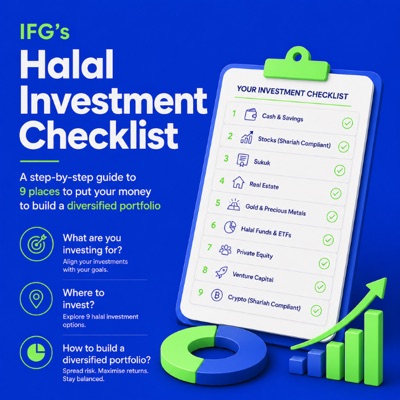
Get the Halal Investment Checklist, the step-by-step guide thousands of Muslim beginners have used to start investing with confidence.
Thank you
Check your inbox for the Halal Investment Checklist. If it isn't there in a few minutes, look in your spam or promotions folder.
Leave a Reply