Best UK Islamic Bank Savings Rates Today (November 2026)

Adil Hussain
18 November 2026 2 min read
Adil Hussain
Head of Content
9 min read
Last updated on:
Canada is home to around 1.8 million Muslims, almost 5% of the population (and similar to our home turf, the UK). That's proportionally more than the US, and growing fast.
And yet, until a few years ago, if you were a Canadian Muslim who wanted to invest the halal way, your options were pretty thin. Most people either put their money into whatever their bank offered and hoped for the best, or kept it in a chequing account where it slowly lost value to inflation.
Alhamdulillah there are now proper halal options in Canada, including ones that work inside your TFSA, RRSP and FHSA.
But before we start, it’s important to note that this isn't a full deep dive like we'd normally do.
It's an introduction to halal investing in Canada, built for our Canadian readers and meant as a place for you to start.
We'll cover how the Canadian accounts work, who offers halal options today, and what to do first.
Yes. The TFSA, RRSP and FHSA are just tax wrappers set up by the government. They're not investments in themselves, so they're neither halal nor haram. What matters is what you put inside them.
If you open one of these at a bank and don't choose anything, your money usually ends up in something interest-bearing, like a GIC or a savings account. So the job isn't to avoid these accounts. It's to make sure what's inside them is halal.
Brokerage accounts also often pay a small amount of interest on uninvested cash. Try and see if you can disable those settings but if you’re unable to then just donate that interest to charity - which is basically ‘purifying’ your money.
You don't need to be a Shariah scholar to invest:
If you want the longer version, our Halal Investing 101 guide goes through it in more detail.
Here are the main providers offering something today. We haven't done a full review of each one yet, so treat this as a map of what's out there rather than a recommendation.
Best for: people who want investing, home finance and wills in one place.
Manzil is a Canadian Islamic finance company that's grown quickly over the last few years. It offers:
In late 2025, Manzil also launched its own halal ETF, MNZL. It's listed in the US on Nasdaq, so it trades in US dollars. Manzil has talked about listing it in Canada too, but that hasn't happened at the time of writing.
Best for: beginners who want a ready-made portfolio.
Wealthsimple has a managed halal portfolio, run as a robo-advisor. You choose your risk level, and it invests you in a mix of a Shariah-compliant global stock fund, gold and non-interest-bearing cash. A third-party Shariah advisory firm screens the holdings.
The main fund inside it is WSHR, the Wealthsimple Shariah World Equity Index ETF, which Wealthsimple runs with Mackenzie Investments. As far as we can tell, it's the only Shariah ETF listed on a Canadian exchange. (It trades on Cboe Canada, not the TSX, despite what a lot of websites say.) You can also buy it yourself through most Canadian brokerages.
Wealthsimple's cash and savings accounts pay interest, so only the halal portfolio itself carries the halal label.
Best for: people who prefer to invest through a financial advisor.
There are a couple of Shariah-compliant mutual funds in Canada, usually bought through an advisor:
2.5% a year doesn't sound like much, but over 30 years it can easily take a third or more of your final pot.
Best for: DIY investors happy to choose their own funds.
Through a Canadian brokerage, you can also buy well-known US halal ETFs such as SPUS (SP Funds) and HLAL (Wahed). They're low-cost and popular, but where you hold them changes how they're taxed:
So if you go down this route, the RRSP is usually the better place to hold them.
Once you screen out banks, insurers and the like, a lot of what's left in a halal stock fund is tech. SPUS, the halal take on the S&P 500, has well over half its money in tech companies (more on that in Is the S&P 500 Halal?).
We explain why that matters in Why Muslims Will Suffer Most When the AI Bubble Bursts.
Best for: people happy to invest in US dollars, outside their registered accounts.
Wahed, the halal robo-advisor, accepts Canadian investors through its global platform. But it's a US-dollar account with a $500 minimum, and it doesn't offer a TFSA or RRSP. For most Canadians, that makes it a second account rather than a first one. Our Wahed review goes through how it works in detail.
Best for: hands-on investors.
If you want to pick individual companies, screening apps will tell you whether a stock passes Shariah checks:
Stock picking can be rewarding, but most people who start there would have been better off starting with a fund. If you're new to investing, our free Halal Investment Checklist walks you through building a diversified halal portfolio step by step.
Best for: people who want halal investments outside the stock market.
Cur8 Capital is IFG's sister company. We offer halal investments outside the stock market, such as property-backed income and private equity in established, profitable businesses. The point is to give you something that doesn't move up and down with the stock market, which matters given how much of a halal stock portfolio sits in tech.
More than 500 Canadians have already signed up to Cur8 Capital. It isn't a replacement for your TFSA or RRSP, and it's only really suitable if you're looking to invest in US dollars or pounds and want that international exposure. Think of it as a way to diversify once the basics are in place.
If that sounds interesting, you can learn more here.
And if you have over $100,000 CAD to invest, you can book a 1-1 call with our investment team.
Getting on the housing ladder is an investment too.
There's no Islamic bank in Canada yet, and none of the big banks offer halal home finance. But a few specialist providers do:
You may remember the 2024 federal budget mentioning "halal mortgages". That was the government saying it was exploring the idea, not launching anything, and there hasn't been a meaningful follow-up since. So for now, these private providers are the main route, and demand is high enough that waitlists are common.
If you're new to how halal home finance works, start with what makes an Islamic mortgage halal. We'll cover the Canadian providers properly in a separate guide.
For most people, the order looks like this:
You don't need to get everything perfect on day one. Most of the benefit comes from starting early and keeping going.
This guide is a first look at halal investing in Canada, not the final word. The market is moving quickly, and there's a lot more we could go into.
What should we cover next?
Get in touch and let us know. The more we hear from Canadian readers, the more Canadian content we'll write.
Halal investing in Canada is far easier than it was even five years ago. The TFSA, RRSP and FHSA aren't the problem. They're just accounts. Put something Shariah-compliant inside them, keep an eye on fees, and give it time.
A TFSA is a tax-free account, so it's neither halal nor haram on its own. It depends on what you hold inside it. Invest it in Shariah-compliant funds or screened stocks, and avoid interest-bearing products like GICs.
The account itself is fine. What matters is the investments inside it. Check what your money goes into by default, as many banks use interest-bearing options.
Yes. WSHR, the Wealthsimple Shariah World Equity Index ETF, trades on Cboe Canada. Canadians can also buy US-listed halal ETFs such as SPUS, HLAL and MNZL through a Canadian brokerage.
Wealthsimple offers a halal portfolio screened by a third-party Shariah advisory firm. Its cash and savings accounts pay interest, so those aren't halal.
Not yet. There's no licensed Islamic bank in Canada, but specialist providers such as Manzil and EQRAZ offer halal home financing.
Yes. More than 500 Canadians have already signed up to Cur8 Capital.
This article is for general information only and isn't financial advice. Investments can go down as well as up. Check the latest fees and terms with each provider before investing.
Adil Hussain
Head of Content
Adil is currently the Head of Content for IslamicFinanceGuru with a long history of creating educational content for Muslims reaching millions. He holds a BSc in Mathematics, an MSc in Data Science and Analytics and a Diploma in Islamic Finance. Adil is currently the Head of Content for IslamicFinanceGuru with a long history of creating educational content for Muslims reaching millions. He holds a BSc in Mathematics, an MSc in Data Science and Analytics and a Diploma in Islamic Finance.
18 November 2026 2 min read


15 July 2026 6 min read
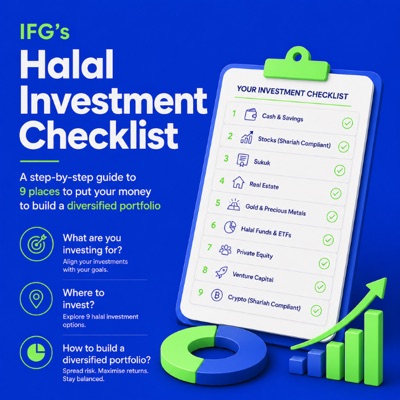
Free download
Get the Halal Investment Checklist, the step-by-step guide thousands of Muslim beginners have used to start investing with confidence.
Thank you
Check your inbox for the Halal Investment Checklist. If it isn't there in a few minutes, look in your spam or promotions folder.

Leave a Reply