
Best UK Islamic Bank Savings Rates Today (November 2026)

Adil Hussain
18 November 2026 2 min read

Mohsin Patel
Co-founder
4 min read
Last updated on:
COVID-19 has had a devastating effect on the stock market. I’m going to take 5 random companies from two major indices (plural of index, which is a fancy way of saying a collection of companies belonging to a group) – the FTSE 100 and the S&P 500. We’ll compare their price on market close on the 26 February 2020 (1 month prior to writing this article) and the close on 25 March 2020.
So that’s 5 random companies all from different industries with a range of share price drops. Some of those fell further but recovered slightly before the 25 March. But the point stands: companies’ share prices have suffered. We’ll discuss investing in individual companies versus investing in a fund later.
Looking at the overall index, the FTSE 100 was trading at 7042.47 on 26 February 2020 and finished on 5688.20 on 25 March 2020. That’s a drop of the whole index (basically the average of all 100 companies in the FTSE 100) of -19.23%.
Similarly, the S&P 500 has had a change in the same period of -20.56%.
The data tells us that the market has dropped overall and that some companies have been hit pretty badly. Others have fared okay.
Should you be investing at this point? My answer to this is the same as my answer when people ask about investing when share prices are “high” in a bull market.
As long as you are investing with a long-term mindset and you are investing regularly (e.g. a monthly deposit) then the data suggests that the stock market is the best place to be.
So this current drop is helpful in that you will be buying in at lower prices than before, but really it should just be part of a long-term strategy not a get-rich-quick thing.
Because the data suggests that with a long term focus, the stock market can give you e xcellent returns.
That’s because although the returns from year to year can vary massively, once you start averaging out your returns over 5, 10, 15 years plus, you start hitting some great numbers.
This article explains it very well.
I would also add that alongside a long-term mindset, you should have a plan to invest monthly and keep topping up whatever you’re invested in. That way, you’ll benefit from any price drops that may occur. A concept known as “cost averaging” where you smooth out your entry price over time. That gets rid of the elusive question of “when is the right time to invest?”.
In summary: a long-term mindset with the stock market, reinvesting any dividends you receive, and tucking money away regularly into the stock market can give fantastic returns.
I know. We all do. But the stock market has made fools out of people much smarter than you and me.
You’ll hear lots of people give stock market tips but having dabbled in short-term trading before, I think that for 99% of people, it’s not the right thing to do. Not only is it really difficult to do well over a sustained period of time, but it’s also emotionally an absolute rollercoaster. You might make money a few times but it’s more down to luck than good judgment and won’t last.
If you’re in the 1% that really understands short-term trading and you’re making money from it, then I’m happy for you but you’ll know better than anyone how hard it actually is.
For most people, investing in a sharia-compliant fund is what makes most sense. That’s because it’s the most hands-off approach that has no additional learning curve. You’re effectively buying a slice of a fund which in turn has invested in hundreds of companies. You don’t need a lot to start with (you can get started with a few hundred pounds).
If you go to our investment comparison page and filter for stocks and shares, you’ll notice the Aberdeen Islamic Global Equity Fund. This is a sharia-compliant fund which invests in large, well-known companies (its top 10 holdings include the likes of Adobe and Nestle, for example).
Investing in this sort of fund gives you good exposure to a large range of companies and so your returns should generally be in line with however the market turns.
If you want a more DIY approach, you can invest in individual companies that you’ve chosen yourself. For instance, in that list above, you might think that Easyjet has been unfairly battered and that they’re fundamentally a good business whose share price will recover. There’s a lot more to share investing than off-the-cuff thoughts like this but these pure commercial thoughts are a good starting point which should trigger a deeper dive.
If you are going this route, just make sure that the companies are halal to invest in. That doesn’t just mean that they’re not gambling or pork companies. There are things to check in their financial accounts. They’re not that complicated, but once you understand them you’ll see what the automatic stock screeners aren’t comprehensive. See here for help on screening companies for sharia compliance.
| Stock | Price on 26 Feb 2020 | Price on 25 Mar 2020 | % change |
|---|---|---|---|
| Easyjet (EZJ) | 1202.50 | 650.80 | -45.88% |
| GlaxoSmithKline (GSK) | 1632.60 | 1489.60 | -8.76% |
| Harley-Davidson (HOG) | $31.76 | $20.56 | -35.26% |
| Southwest Airlines (LUV) | $48.90 | $39.40 | -19.43% |
| Visa (V) | $187.21 | $161.78 | -13.58% |
Mohsin Patel
Co-founder
Mohsin is the co-founder of IslamicFinanceGuru, an Oxford graduate and a Forbes 30 under 30 alumnus. He's a former corporate lawyer at one of the world's largest US firms. Whilst running IFG, Mohsin is also actively interested and invested in the web3/crypto space. Publication: Halal Investing for Beginners: How to Start, Grow and Scale Your Halal Investment Portfolio (Wiley) Mohsin is the co-founder of IslamicFinanceGuru, an Oxford graduate and a Forbes 30 under 30 alumnus. He's a former corporate lawyer at one of the world's largest US firms. Whilst running IFG, Mohsin is also actively interested and invested in…
18 November 2026 2 min read


15 July 2026 6 min read
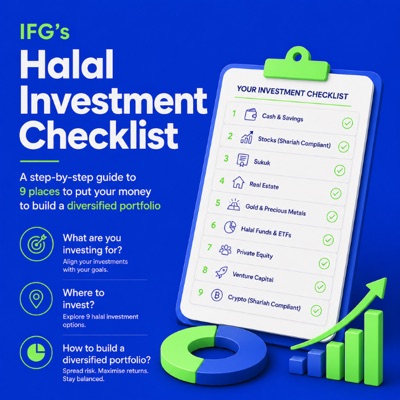
Free download
Get the Halal Investment Checklist, the step-by-step guide thousands of Muslim beginners have used to start investing with confidence.
Thank you
Check your inbox for the Halal Investment Checklist. If it isn't there in a few minutes, look in your spam or promotions folder.
Leave a Reply